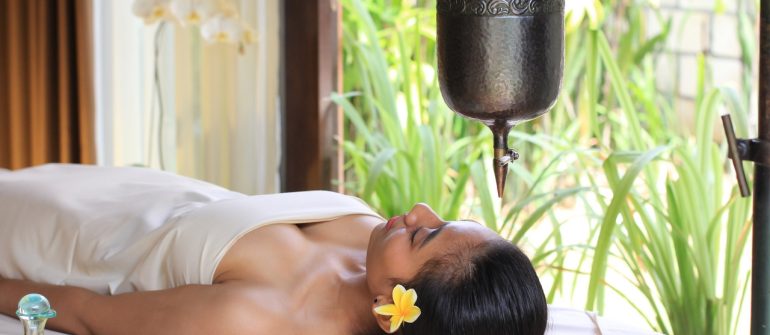
Shirodhara is a traditional Ayurvedic therapy known for its calming and relaxing approach to mind and body care. It involves the gentle, continuous pouring of warm medicated oil or another selected liquid over the forehead. When combined with Abhyangam, or Ayurvedic full-body oil massage, it forms a relaxation therapy that can be experienced at home.
Ayurveda also describes several related pouring treatments under the broader concept of Dhara. These include Sarvangadhara or Parisheka treatment, where medicated liquids are poured over the body or specific body regions. The liquid, method, and area of application depend on the purpose of the treatment and the individual’s needs.
At Ayursh, traditional Ayurvedic therapies are available at home. Understanding the differences between these treatments helps people learn about their methods, traditional uses, and place in Ayurvedic care.
What Is Shirodhara in Ayurveda?
The word Shirodhara refers to a treatment in which a steady stream of selected liquid is directed over the forehead. The liquid may be medicated oil, milk, buttermilk, or another preparation chosen according to the treatment plan.
Shirodhara is traditionally associated with relaxation and mental calmness. It is often considered for people experiencing stress, disturbed sleep, mental fatigue, or tension. When performed with Abhyangam, the session begins with a full-body oil massage before the forehead-pouring procedure.
Although Shirodhara is a well-known relaxation therapy, it is important to distinguish it from Sarvanga Dhara. Shirodhara focuses on the head and forehead, whereas Sarvanga Dhara involves pouring medicated liquids over the body. Both belong to the broader tradition of Dhara treatments, but their procedures and applications are different.
Understanding Sarvangadhara or Parisheka Treatment
Sarvangadhara or Parisheka treatment is an Ayurvedic procedure in which a selected medicated liquid is poured over the body in a controlled manner. The term Sarvanga refers to the whole body, while Dhara refers to a continuous stream or flow.
The treatment may be discussed under related names such as Kayaseka and Sarvanga Dhara. Pizhichil is another traditional treatment associated with the continuous pouring of medicated oil over the body and is also described as Sarvanga Taila Dhara.
These procedures form part of the wider Ayurvedic approach to Swedana, or sweat-inducing treatment. Depending on the method and the substances used, Ayurvedic practice describes two broad forms:
- Ruksha Sweda: Dry fomentation, performed without the use of oily substances.
- Snigdha Sweda: Wet or unctuous fomentation, involving oily substances or other suitable liquids.
Parisheka Sweda is a form of treatment involving the pouring of warm liquids over the body. The specific procedure is selected according to the intended purpose and the practitioner’s assessment.
Different Types of Dhara Treatments
Ayurveda describes several Dhara procedures based on the liquid used and the body region being treated. Understanding these differences is important because the treatments are not interchangeable.
1. Kumbha Parisheka
In Kumbha Parisheka, medicated liquids are poured using a vessel. The liquid may include Kwatha, Kashaya, Ksheera, Dhanyamla, Ghrita, or Taila, depending on the selected treatment.
- Kwatha and Kashaya: Herbal decoctions prepared for therapeutic use.
- Ksheera: Milk used in selected Ayurvedic procedures.
- Dhanyamla: A fermented liquid used in certain traditional treatments.
- Ghrita: Ghee used in specific Ayurvedic preparations.
- Taila: Oil, including medicated herbal oils.
The substance, temperature, method, and duration are determined by the treatment plan rather than using the same preparation for everyone.
2. Ekanga Dhara or Sthanika Dhara
Ekanga Dhara or Sthanika Dhara refers to applying the Dhara procedure to a particular body part or region instead of the whole body. This approach allows the practitioner to focus on the area relevant to the person’s needs.
The selected liquid and technique depend on the region being treated and the intended therapeutic purpose.
3. Common Types Based on the Liquid Used
The names of several Dhara procedures describe the material applied:
- Taila Dhara: Pouring medicated oil.
- Kashaya Dhara: Pouring a herbal decoction.
- Gritha Dhara: Using medicated ghee.
- Dhanyamla Dhara: Using a medicated fermented liquid.
- Ksheera Dhara: Using milk, sometimes prepared with medicinal herbs.
- Takra Dhara: Using buttermilk.
These methods are selected according to the traditional treatment principles and the individual’s requirements. They should not be assumed to provide identical effects or be suitable for every person.
How Shirodhara Massage Is Performed
A traditional Shirodhara session requires preparation, careful positioning, and a controlled flow of the chosen liquid. The procedure may vary according to the treatment plan.
Purva-karma: Pre-Treatment Procedure
Purva-karma refers to the preparatory steps completed before the main procedure. The practitioner reviews the individual’s needs, selects the appropriate materials, and prepares the treatment area.
The person is positioned comfortably on a treatment table, with the head and shoulders supported as required. The chosen liquid is warmed to a suitable temperature, and the pouring vessel is arranged to maintain a gentle, steady flow.
When Shirodhara is combined with Abhyangam, the full-body oil massage is performed first. This prepares the body for the relaxation-focused part of the session.
Pradhana Karma: Main Procedure
During Shirodhara, the selected liquid is poured continuously over the forehead in a controlled, rhythmic manner. The stream is directed carefully by the therapist while the person remains comfortably positioned.
The liquid may be medicated oil, a herbal preparation, or another substance chosen for the treatment. The practitioner monitors the temperature, flow, and comfort throughout the session.
The aim is to provide a calm, consistent treatment experience. The procedure should be performed by a trained therapist following appropriate Ayurvedic guidance.
Paschat Karma: Post-Treatment Procedures
Paschat Karma refers to the steps followed after treatment. Once the pouring procedure is complete, the therapist gently removes excess liquid as appropriate and may provide guidance on scalp care, rest, and other aftercare measures.
The person may be advised to take time to relax after the session. Any additional instructions depend on the treatment received and the individual’s circumstances.
Traditional Ayurvedic Uses of Dhara Therapy
Dhara treatments are selected according to Ayurvedic assessment, the procedure being considered, and the person’s needs. Shirodhara is commonly associated with relaxation, while whole-body and localised Dhara procedures have different traditional applications.
Sarvanga Dhara and related procedures are discussed in Ayurvedic care for various musculoskeletal conditions, including:
- Amavata vis-à-vis Rheumatoid Arthritis.
- Sandhigata Vata (Osteoarthritis).
- Kati Shula (Low back pain).
- Mamsagata Vata (Myalgia).
- Fibromyalgia.
Other conditions mentioned in traditional Ayurvedic discussions of musculoskeletal and neuromuscular care include Ankylosing Sponylosis, GB Syndrome, Paralysis, Paraplegia, Frozen Shoulder, Sciatica, and Gout.
These conditions are different from one another and require appropriate medical assessment. Their inclusion in traditional discussions of Dhara therapy does not mean that Shirodhara or Sarvanga Dhara alone can treat or cure them. Such procedures should be considered only as part of an appropriate care plan, not as a replacement for necessary medical treatment.
Medicated Oils and Liquids Used in Ayurvedic Dhara
The materials used in Dhara therapy depend on the type of procedure and the individual’s requirements. Several traditional medicated oils are used in Ayurvedic practice, including:
- Ksheerabala Thailam
- Dhanwanthara Thailam
- Sahacharadi Thailam
- Mahanarayana Thailam
- Balaswagandhadhi Thailam
- Karpasthyadhi Thailam
These oils have different traditional formulations and uses. The appropriate choice should be made by a qualified Ayurvedic practitioner rather than selected solely by name.
Other liquids are used in specific procedures. Ksheera Dhara uses milk, which may be prepared with the Roots of Dhasamoola. Takra Dhara uses buttermilk, while Dhanyamla Dhara uses a medicated fermented liquid. Their use depends on the selected procedure and the practitioner’s guidance.
For Shirodhara, the selected liquid is applied to the forehead. For Sarvanga Dhara, the procedure may involve the body or a broader body area. This distinction is important when choosing a therapy.
Shiro Abhyanga, Sneha Dhara and Abhyangam
Shiro Abhyanga is an Ayurvedic head massage performed with suitable oil. Chandanabala Lakshadi Tailam is one of the traditional oils associated with this type of care.
Sneha Dhara refers to the use of an unctuous substance, such as oil, in a continuous pouring procedure. Abhyangam, in contrast, involves the application of oil through massage movements. Although these procedures can be included in related Ayurvedic treatment plans, they are distinct techniques.
When Abhyangam is combined with Shirodhara, the body massage is followed by the forehead-pouring procedure. At Ayursh, the combined service is offered as a home-based relaxation therapy. The exact treatment plan and materials used should be confirmed before the session.
Shirodhara Massage at Home with Ayursh
Receiving Ayurvedic therapy at home can make it easier to arrange a session within a familiar environment. Before booking, it is useful to understand which procedure is included, how long the session will take, and what preparation is needed.
Ayursh offers Shirodhara with Abhyanga, combining a full-body oil massage with the subsequent Shirodhara procedure. The treatment uses a selected liquid according to the service and treatment plan.
People with ongoing health conditions, those taking medication, or anyone unsure whether a therapy is appropriate should discuss their circumstances with a qualified healthcare professional and Ayurvedic practitioner before proceeding.
To learn more about the combined treatment, visit the shirodhara massage service page.
Conclusion
Shirodhara and Sarvangadhara are related but distinct procedures within traditional Ayurvedic practice. Shirodhara focuses on the forehead and is commonly used as a relaxation therapy, while Sarvanga Dhara involves pouring selected liquids over the body. Other approaches, such as Ekanga Dhara, focus on a particular body region.
Understanding the differences between Taila Dhara, Kashaya Dhara, Gritha Dhara, Dhanyamla Dhara, Ksheera Dhara, and Takra Dhara helps explain how the liquid used forms part of the treatment method. Purva-karma, the main procedure, and Paschat Karma are also important parts of the traditional treatment process.
The most appropriate procedure depends on the individual’s needs and professional assessment. When considering Ayurvedic care, it is important to choose a suitable treatment and follow the guidance of qualified practitioners.
Frequently Asked Questions
1. What is the difference between Shirodhara and Sarvanga Dhara?
Shirodhara involves the continuous pouring of a selected liquid over the forehead. Sarvanga Dhara involves pouring medicated liquids over the body. Both are traditional Ayurvedic procedures, but their application and treatment purpose differ.
2. What liquids are used in Shirodhara?
Depending on the treatment plan, Shirodhara may use medicated oil, milk, or a suitable herbal preparation. The practitioner selects the liquid according to the person’s needs and the intended procedure.
3. What is the meaning of Purva-karma and Paschat Karma?
Purva-karma means the preparatory procedures performed before the main treatment. Paschat Karma refers to the steps followed after the procedure, including appropriate cleaning and aftercare guidance.
4. Is Pizhichil the same as Shirodhara?
No. Pizhichil is associated with the continuous pouring of medicated oil over the body, also described as Sarvanga Taila Dhara. Shirodhara focuses on the forehead.
5. Can Shirodhara be combined with Abhyangam at home?
Yes. Ayursh offers a home-based Shirodhara with Abhyanga service. The session combines full-body oil massage with the forehead-pouring procedure. It is advisable to discuss individual health needs with a qualified practitioner before booking.