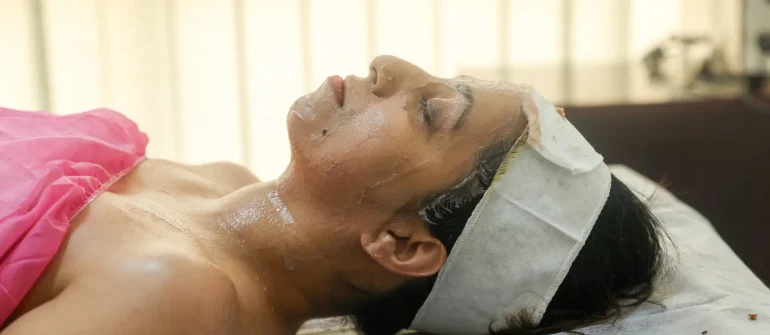
What is Shiro Pichu?
Shiro Pichu is a traditional Ayurvedic therapy used for calming the mind, balancing the nervous system, and nourishing the head region. In this treatment, a sterile cotton pad soaked in medicated herbal oil is placed over the crown of the head for a specific duration. Though simple in procedure, Shiro Pichu is considered highly effective in managing stress-related disorders, headaches, insomnia, hair problems, and neurological conditions.
The term “Shiro Pichu” is derived from two Sanskrit words — Shiro meaning head and Pichu meaning cotton pad or sterile swab. This therapy is classified under Murdhni Taila, which refers to Ayurvedic treatments involving application of oil over the head. It is also considered a part of Bahya Snehana or external oleation therapies.
Importance of Head According to Ayurveda
Ayurveda compares the human body to an inverted tree. In this concept, the head is considered the root, the trunk represents the chest and abdomen, while the limbs are compared to branches. Just as roots nourish and control the entire tree, the head governs all physical, mental, and sensory functions of the body.
For this reason, the head is called Uttamanga, meaning the most important organ of the body. Since the brain, sensory organs, and nervous system are centered in the head region, therapies like Shiro Pichu are believed to influence both physical and psychological health deeply.
Conditions Where Shiro Pichu is Beneficial
Shiro Pichu is commonly recommended in various neurological, psychological, and degenerative disorders. It is especially useful in conditions involving aggravated Vata Dosha, which governs the nervous system and movement in Ayurveda.
This therapy is traditionally used in Shiro Roga such as chronic headache and migraine, Anidra or insomnia, Pakshaghata (paralysis and hemiplegia), stress-related disorders, anxiety, depression, PTSD, and emotional imbalance. It is also beneficial in complications following head injuries, referred to as Shiro Abhihata.
In many cases, Shiro Pichu is used for symptoms like neck stiffness (Manyastambha), facial paralysis (Ardita), twitching, speech difficulties (Svara Hani), dizziness, dryness of scalp, premature greying, and hair fall. Because of its nourishing and calming effect, it is also widely used as a rejuvenative therapy.
Oils Used in Shiro Pichu
The medicated oil selected for Shiro Pichu depends on the patient’s Prakriti (body constitution), disease condition, and Dosha imbalance. Ayurveda gives importance to individualized treatment, and therefore different oils are used according to the therapeutic requirement.
Ksheerabala Tailam is commonly used in neurological disorders and Vata imbalance because of its nourishing and nerve-strengthening properties. Dhanwantaram Tailam is preferred in Vata and Pitta disorders associated with dizziness, weakness, and stiffness. Mahanarayana Tailam is widely used for headache, nerve pain, and musculoskeletal disorders.
For stress, mental fatigue, and insomnia, Brahmi Tailam is considered highly effective due to its calming action on the nervous system. Chandanabala Lakshadi Tailam is often selected in Pitta-related conditions because of its cooling nature. Oils like Neeli Bhringadi Tailam are used to improve scalp nourishment, hair strength, and hair growth, while Balashwagandhadi Tailam is used for rejuvenation and strengthening therapies.
Depending on the physician’s clinical judgment, these oils may sometimes be used individually or combined together for better therapeutic effect.
Procedure of Shiro Pichu
The therapy begins with proper assessment of the patient’s health condition, body constitution, and Dosha imbalance. Based on this examination, the appropriate medicated oil is selected. The oil is heated indirectly using a water bath method to maintain a safe lukewarm temperature.
During the procedure, the patient is seated comfortably, usually facing east or north. A small quantity of warm oil is first applied gently over the crown of the head. A sterile cotton pad is then soaked in the medicated oil and placed over the scalp. In some traditional methods, castor leaves may be placed over the cotton pad for additional Vata-pacifying effects.
The cotton pad is secured using a soft bandage cloth so that it remains in position without causing discomfort. Care is taken to ensure the bandage is neither too tight nor too loose. The oil should always remain comfortably warm and never excessively hot.
Duration and Post-Treatment Care
Generally, the Pichu is kept in place for about six to eight hours. It may be applied in the morning and removed by evening, or in some cases applied overnight depending on the condition and patient comfort. The duration of treatment may range from seven to twenty-one days, while chronic neurological conditions may require longer therapy duration.
After removing the Pichu, the scalp is cleaned gently using a soft cloth or tissue. A warm water bath is usually advised. Herbal powders like Rasnadi Churna may be applied over the crown to prevent cold and sinus-related symptoms.
Ayurveda also recommends light and easily digestible food after treatment. Preparations such as Yavagu, Manda, and Peya are traditionally advised because they support digestion and metabolism. Herbal decoctions like Gandharvahastadi Kashayam may also be prescribed to maintain Dosha balance and improve internal cleansing.
Patients undergoing Shiro Pichu are generally advised to avoid excessive stress, late-night sleeping, cold exposure, heavy physical exertion, and unhealthy food habits during the therapy period.
Mode of Action of Shiro Pichu
According to Ayurveda, the therapeutic effect of Shiro Pichu mainly works through balancing the Doshas, especially Vata Dosha. Since Vata governs all neurological and sensory activities, calming Vata helps improve nerve function, reduces stiffness, relieves pain, and promotes mental relaxation.
The therapy also provides a calming effect on the brain and nervous system. Ayurveda explains that Shiro Pichu helps soothe the mind, reduce stress, and balance higher mental functions controlled by structures comparable to the hypothalamus and pituitary gland.
Another important effect is balancing Pitta and Rakta, which helps reduce inflammation, excessive heat, irritability, and headaches. By nourishing the scalp and stimulating vital Marma points like Sthapani, Shankha, and Avarta, the therapy is believed to improve sensory coordination, concentration, and overall brain function.
Shiro Pichu also enhances blood circulation and nutrient supply to brain tissues, thereby improving clarity, emotional stability, and relaxation.
Benefits of Shiro Pichu
Regular Shiro Pichu therapy offers several physical and mental health benefits. It helps reduce stress, anxiety, irritability, and depression while improving sleep quality and mental calmness. The therapy is also known for preventing headaches, migraines, scalp dryness, and hair fall.
It strengthens hair roots, delays premature greying, improves scalp nourishment, and enhances memory and concentration. Ayurveda also considers this therapy beneficial for improving skin glow, supporting hormonal balance, delaying ageing, and maintaining healthy sensory organs.
Shiro Pichu is particularly valuable in neurological rehabilitation and is often used as supportive care in stroke recovery, paralysis, facial palsy, and degenerative nervous system disorders. In long-term rehabilitation cases, therapies such as Paralysis Massage at Home can complement Shiro Pichu by improving circulation, muscle tone, flexibility, and nerve recovery through personalized Ayurvedic care at home.
Limitations of Shiro Pichu
Although Shiro Pichu provides significant benefits, Ayurveda considers it part of a broader treatment approach rather than a standalone cure for severe diseases. For chronic or complex neurological disorders, it is usually combined with internal Ayurvedic medicines, Panchakarma procedures, dietary regulation, physiotherapy, and lifestyle modifications for better results.
Conclusion
Shiro Pichu is one of the simplest yet most effective Ayurvedic therapies for balancing the nervous system and calming the mind. By nourishing the scalp, improving circulation, and pacifying Vata Dosha, it supports both preventive and therapeutic healthcare.
Whether used for stress management, sleep disorders, hair care, or neurological rehabilitation, Shiro Pichu remains a valuable Ayurvedic therapy that can also be adapted safely for home-based supportive care under professional guidance.