Recovering from paralysis is as much about consistency as it is about the right therapy. Travelling to a clinic for daily sessions is exhausting for a patient with limited mobility — and often for the family too. This is exactly why paralysis massage at home in Hyderabad has become the preferred choice for so many households. Ayursh brings certified Ayurvedic therapists and doctor-guided treatment plans directly to your doorstep, so the patient heals in a familiar, stress-free environment.
Below is a clear, doctor-informed look at how Ayurveda understands paralysis, which therapies help, and what a home-based recovery programme in Hyderabad actually involves.
Understanding Paralysis Through Ayurveda
In Ayurveda, all movement, sensation and nerve signalling in the body are governed by Vata dosha. Paralysis — the loss of voluntary muscle function — is therefore classified as a Vata Vyadhi, a disorder arising from severely aggravated Vata. When this aggravated Vata settles in the nerves, muscles and joints, it disrupts both motor control and the sense of touch.
The two subtypes of Vata most involved are Prana Vata (governing the brain and senses) and Udana Vata (governing speech, effort, strength and energy). Weakness in speech, grip and stamina after a stroke reflects the disturbance of exactly these functions.
Classical Ayurveda describes several presentations that map closely to modern paralysis:
- Pakshaghata (Pakshavadha): loss of movement and sensation on one half or one side of the body, comparable to hemiplegia and post-stroke paralysis.
- Ekanga Vata: paralysis limited to one part or limb, similar to monoplegia.
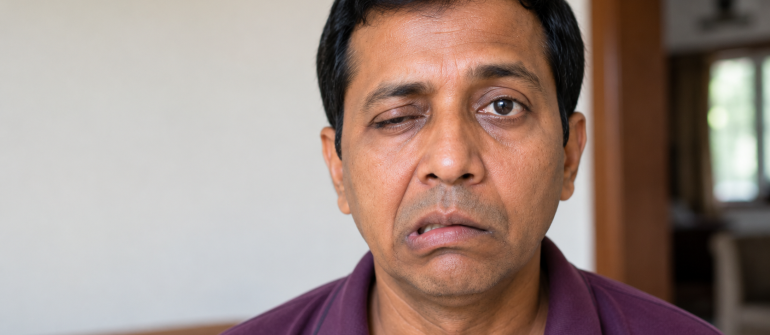
- Ardita: paralysis affecting the face, causing deviation of one side, drooping and speech obstruction — closely comparable to Bell’s palsy and facial paralysis.
Ayurveda also identifies two underlying mechanisms that decide how recoverable a case is. Dhatu kshaya (depletion of body tissues) tends to indicate a deeper, slower-recovering condition, while Avarana (obstruction or blocking of Vata’s normal flow) is often more responsive to therapy. A qualified Ayurvedic doctor assesses which pattern is dominant before designing treatment.
Why Muscle and Sensation Are Lost
Two Ayurvedic concepts explain the classic symptoms. First, Sparshanendriya — the sense organ of touch — is a seat of Vata; when Vata is disturbed, numbness and loss of tactile sensation follow. Second, healthy muscle depends on Sama mamsa pramana, the balanced proportion of muscle tissue. Aggravated Vata erodes this balance, leading to muscle wasting, weakness and loss of control. This is why paralysis care in Ayurveda focuses equally on calming Vata and rebuilding strength.
How Ayurvedic Massage and Therapy Support Recovery
Ayurvedic paralysis care combines external therapies (massage and oil applications) with internal cleansing and nourishing procedures. Delivered at home, these therapies help improve circulation, reduce stiffness, stimulate the nerves and support the return of muscle function — always under a doctor’s supervision.
External Therapies (Massage-Based)
- Abhyanga: warm medicated-oil massage that pacifies Vata, improves blood flow to affected limbs and reduces rigidity. This is the cornerstone of home paralysis care.
- Dhara: a continuous stream of warm medicated oil poured over the body or head to relax muscles and calm the nervous system.
- Snehana (oleation) and Swedana (sudation/steaming): oleation softens tissues and carries herbs deep into the body, while gentle steaming loosens stiffness and eases spasms.
- Naadi Sweda (targeted tube-steam) and Upanaha Sweda (herbal poultice application): focused therapies for specific stiff or weak muscle groups.
Head and Facial Therapies
For Ardita, facial paralysis and Bell’s palsy, therapies focused on the head are especially valued: Shiro Abhyanga (head massage), Shiro Pichu (oil-soaked cloth on the scalp), Shiro Dhara (oil stream on the forehead) and Shiro Vasti (oil retained on the head in a cap). These nourish and stimulate the cranial nerves.
Cleansing and Nourishing Procedures
Under doctor guidance, deeper Panchakarma procedures may be advised: Virechana (therapeutic purgation, often using Trivrut Lehya), Vasti (medicated enema, considered the most powerful therapy for balancing Vata at its root), Nasya (nasal medication, regarded as the best therapy for facial paralysis) and Tarpana (nourishing, Vata-pacifying preparations). Together these work on what Ayurveda views as the gut–brain connection, aiding rejuvenation of the nervous system.
Herbs and Formulations Commonly Used
Your Ayursh doctor prescribes internal medicines based on the individual’s dosha pattern and stage of recovery. Frequently used herbs include Ashwagandha (strength and nerve support), Guggulu, Nirgundi, Brahmi (cognitive and nerve tonic), Shunti (dry ginger) and Rasona (garlic).
Classical decoctions such as Maharasnadi Kashayam and Sahacharadi Kashayam are widely used for neuromuscular conditions. For external application and therapies, medicated oils (Thailam) like Ksheerabala Thailam, Balaashwagandhadi Thailam, Dhanwantharam Thailam and Mahamasha Thailam are chosen according to the therapy and the patient’s needs.
These formulations should only be taken under professional supervision. Ayursh’s online doctor consultation makes it easy to have your prescription reviewed before therapy begins.
Rebuilding Strength After Paralysis
Recovery is not only about relieving stiffness — it is about restoring stamina and muscle tone that paralysis takes away. Rejuvenative, strength-building therapies play a key role here, particularly for elderly patients and those recovering from a prolonged bedridden phase. Ayursh’s Balavardhaka home Ayurvedic therapy is designed exactly for this — a nourishing, at-home programme that supports strength, mobility and overall vitality alongside the core paralysis treatment.
Why Choose Ayursh for Paralysis Massage at Home in Hyderabad
- Certified, trained therapists who specialise in Ayurvedic and neuro-rehabilitation massage.
- Doctor-designed plans: experienced BAMS/MD Ayurvedic physicians assess whether the case is driven by Dhatu kshaya or Avarana and tailor therapy accordingly.
- True convenience: no travel, no waiting rooms — daily sessions happen at home, which is vital for consistency in paralysis recovery.
- PAN-Hyderabad coverage: services across all major localities of Hyderabad and NCR.
- Family-friendly: caregivers are guided on positioning, safety and simple supportive practices between sessions.
Frequently Asked Questions
Can Ayurvedic massage help with paralysis at home? Ayurvedic therapies such as Abhyanga, Swedana, Vasti and Nasya are traditionally used to support paralysis recovery by pacifying aggravated Vata, improving circulation and rebuilding muscle strength. At-home delivery helps maintain the daily consistency recovery requires. Outcomes vary by individual, so treatment is always planned by a qualified doctor.
Is home therapy suitable for stroke and facial paralysis (Bell’s palsy)? Yes. Post-stroke paralysis is understood as Pakshaghata, while facial paralysis and Bell’s palsy correspond to Ardita. Head and facial therapies like Shiro Abhyanga, Shiro Dhara and Nasya are particularly relevant for these conditions.
How long does Ayurvedic paralysis treatment take? It depends on the cause, severity and how early therapy begins. Cases rooted in Avarana (obstruction) often respond faster than those involving deep Dhatu kshaya (tissue depletion). Your doctor will share a realistic timeline after assessment.
Do I need a doctor consultation before booking? It is strongly recommended. A consultation lets the physician confirm the dosha involvement and prescribe the right herbs, oils and therapy sequence for safe, effective care.
Book Paralysis Massage at Home in Hyderabad
Give your loved one the comfort of expert Ayurvedic care without leaving home. Book paralysis massage at home in Hyderabad with Ayursh and start a doctor-guided recovery plan today.
Call +91 88848 33000 to schedule your session.
<!– Disclaimer for publishing: This content is for informational purposes and does not replace professional medical advice. Ayurvedic therapies are supportive/complementary care and should be undertaken under a qualified physician’s guidance. –>