Knee pain and arthritis are becoming increasingly common due to aging, long working hours, past injuries, and lifestyle habits that aggravate the joints. Many individuals look for gentle, long-term, and natural solutions rather than painkillers or invasive procedures. One of the most effective traditional solutions from Ayurveda is Janu Basti, a focused knee-care therapy that nourishes the joint, reduces stiffness, and supports recovery from chronic pain.
This blog explains how Janu Basti at Home works, its benefits, treatment procedure, and why this Ayurvedic approach is ideal for knee pain and arthritis management.
What Is Janu Basti?
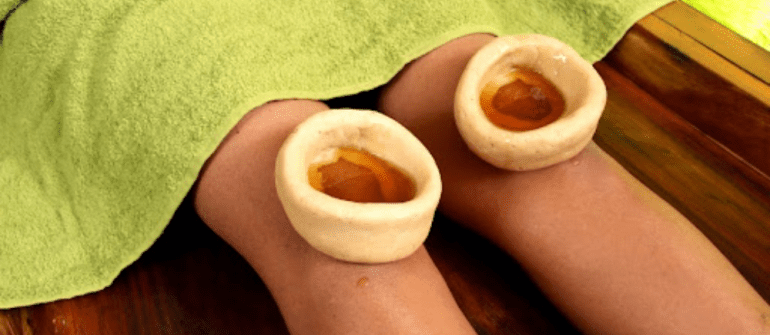
In Ayurveda, Janu means knee and Basti refers to retention therapy. Janu Basti is a classical Ayurvedic knee therapy where warm medicated oil is retained over the knee joint for a fixed duration using a compartment made from Urad dal (black gram) dough. This allows the herbal oil to penetrate deeper into the tissues surrounding the joint.
The therapy is a part of traditional Panchakarma, specifically focusing on pacifying aggravated Vata dosha, which is considered the primary cause of joint pain, degeneration, and stiffness.
The procedure includes gently heating and refilling the oil throughout the session to maintain therapeutic warmth and effectiveness.
How Janu Basti Works: The Ayurvedic Mechanism
Janu Basti is based on Ayurvedic principles of Snehana (oleation) and Swedana (sudation). The warm medicated oil penetrates the knee joint and:
- Lubricates the joint and surrounding tissues
- Supports synovial fluid production
- Nourishes cartilage
- Reduces stiffness and inflammation
- Soothes Vata imbalance
- Improves flexibility and mobility
In cases where knee stiffness, swelling, or heaviness occur due to Ama (toxins) or Kapha imbalance, the therapy is often combined with Choorna Pinda Sweda, Patra Pinda Sweda, or Upanaha Sweda for better results.
Conditions Janu Basti Helps With
Common Knee Pain Conditions
- Osteoarthritis (Sandhivata)
- Chronic knee pain
- Knee stiffness due to age or lifestyle
- Patellar tendonitis
- Knee strain or sprain
Injury-Related Issues
- ACL injuries
- Torn meniscus
- Ligament tears
- Meniscal degeneration
- Sports-related knee injuries
Contraindications
Janu Basti is not advised in acute rheumatoid arthritis.
Janu Basti at Home: How the Therapy Is Done
One of the biggest advantages of this treatment is that it can be administered professionally at home. A trained Panchakarma therapist visits your home and carries out the following steps:
- Preparation of a thick dough ring using Urad dal (black gram) paste.
- Placing the dough ring around the knee to form a sealed compartment.
- Pouring lukewarm medicated herbal oil into the cavity.
- Maintaining therapeutic temperature by reheating and refilling the oil.
- Allowing the oil to remain over the joint for a prescribed duration.
- Gently massaging the knee after the procedure, if required.
- Combining the session with supportive therapies (Choorna Pinda Sweda, Patra Pinda Sweda, etc.) if recommended based on your condition.
This home knee pain treatment ensures comfort, convenience, and better relaxation during the therapy.
Recommended Duration for Visible Results
Based on Ayurvedic clinical practice:
- Recent knee pain (less than 6 months): Minimum 7 sessions
- Chronic knee pain or arthritis: 14 to 21 sessions
Since Ayurveda works on root-cause correction and tissue nourishment, multiple sessions help achieve long-lasting benefits.
Key Janu Basti Benefits
Janu Basti offers several long-term advantages for individuals dealing with knee pain or arthritis. Key janu basti benefits include:
- Reduced knee stiffness
- Enhanced joint lubrication
- Nourishment of cartilage and surrounding tissues
- Improved flexibility and mobility
- Reduction in inflammation
- Support for ligament and meniscus injuries
- Delayed degeneration of knee joint
- Better synovial fluid balance
- Improved overall knee function
This makes the therapy highly effective for elderly individuals, athletes, working professionals, and anyone experiencing regular knee discomfort.
Why Choose Janu Basti at Home?
Opting for home-based therapy has many advantages:
- No travel stress, especially important for individuals with knee pain
- Comfortable and hygienic environment
- Personalised attention from trained therapists
- Consistent session timing
- Easier follow-up care and lifestyle recommendations
- Better relaxation and recovery
Home therapy also supports long-term compliance, helping individuals complete the required number of sessions for best results.
Ayurvedic Precautions and Client Responsibilities
Ayurveda focuses on gradual healing. Janu Basti works best when clients:
- Follow therapist instructions carefully
- Share complete medical history
- Avoid exposure to cold immediately after therapy
- Maintain a Vata-balancing diet and routine
- Understand that natural healing takes time
- Participate actively in lifestyle changes recommended during the sessions
This approach enhances results and supports holistic recovery.
Home Care Tips After Janu Basti
To maintain and enhance the benefits of the therapy:
- Take a warm water bath after the session
- Avoid cold exposure to knees
- Include light stretching as advised
- Avoid sitting on the floor or prolonged standing
- Follow an anti-Vata diet (warm, cooked foods)
- Avoid high-impact activities for a few days
These small habits support knee strength and prevent further degeneration.
Conclusion
Janu Basti at Home is one of the most effective Ayurvedic therapies for knee pain, arthritis, ligament injuries, and chronic stiffness. It works by nourishing the knee joint, improving lubrication, reducing degeneration, and restoring mobility naturally. With its focus on root-cause healing and whole-body balance, Janu Basti offers a safe, non-surgical, and holistic alternative for long-term knee wellness.
Frequently Asked Questions (FAQ)
1. How many Janu Basti sessions are required for knee pain?
Recent knee pain usually requires at least 7 sessions. Chronic arthritis or long-standing pain may require 14–21 sessions for noticeable improvement.
2. Is Janu Basti painful?
No. The therapy is gentle and soothing. Warm medicated oil provides comfort and relaxation to the knee joint.
3. Can Janu Basti help with osteoarthritis?
Yes. Janu Basti is highly beneficial for osteoarthritis as it nourishes cartilage, improves lubrication, and reduces stiffness associated with Sandhivata.
4. Can I receive Janu Basti at home safely?
Yes. When performed by trained Panchakarma therapists, Janu Basti at home is safe, convenient, and effective.
5. Is Janu Basti suitable for swelling or inflammation?
Yes, especially when swelling is due to Vata imbalance. However, if swelling is due to Ama or Kapha, supportive therapies like Choorna Pinda Sweda may be required first.