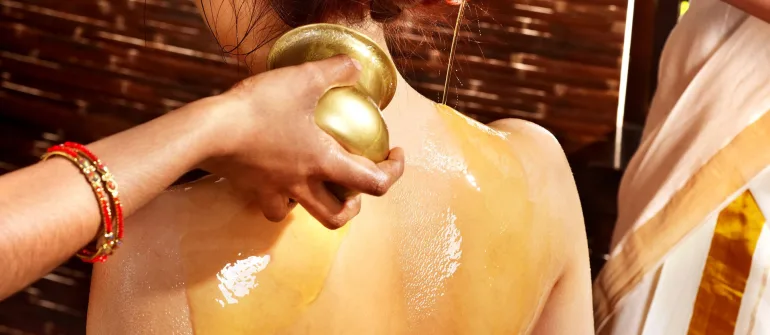
What is Dhanyamla Dhara?
Dhanyamla Dhara is a classical Ayurvedic therapy in which a warm, fermented herbal liquid is poured continuously over the body for a specific duration. This treatment is also known as Kanji Dhara, Kanjika Dhara, or Aranala Dhara and falls under Parisheka Sweda, a sudation therapy designed to induce sweating and eliminate toxins (Ama).
Unlike oil-based therapies such as Pizhichil (Kaya Seka), Dhanyamla Dhara uses a sour, fermented liquid that has strong metabolic and anti-inflammatory properties. It is especially effective in conditions involving Vata-Kapha imbalance and Ama accumulation.
What is Dhanyamla?
Dhanyamla is a fermented liquid prepared using cereals, pulses, and medicinal herbs. The fermentation process (Sandhana Kalpana) enhances its potency and creates its characteristic sour (Amla) nature.
Key ingredients include:
- Tandula (rice)
- Pruthuka (rice flakes)
- Kulattha (horse gram)
- Laja (puffed rice)
- Kangubeeja (little millet)
- Kodrava (kodo millet)
- Nagara (dry ginger)
- Nimbuka (lime)
- Deepyaka (carom seeds)
After fermentation (typically 5–7 days), the liquid becomes rich in therapeutic compounds that act deeply on metabolism, inflammation, and circulation.
How Dhanyamla Dhara Works
Dhanyamla possesses:
- Amla Rasa (sour taste)
- Ushna Veerya (hot potency)
- Laghu & Teekshna Guna (light and penetrating qualities)
When used in Dhara form:
- Induces sweating (Swedana)
- Opens blocked body channels (Srotas)
- Enhances circulation
- Reduces stiffness, swelling, and heaviness
It acts at both metabolic and tissue levels by improving Agni (digestive fire) and clearing Ama (toxins).
Key Benefits of Dhanyamla Dhara
- Pain and Stiffness Relief
- Effective in joint pain, swelling, and stiffness
- Useful in arthritis and musculoskeletal disorders
- Detoxification (Ama Pachana)
- Breaks down and eliminates toxins
- Improves digestion and metabolism
- Joint & Muscle Support
- Enhances flexibility
- Prevents degeneration
- Nervous System Support
- Calms nerves
- Helpful in neuromuscular conditions
- Improved Circulation
- Enhances blood flow
- Promotes tissue nourishment
- Reduces Fatigue
- Relieves heaviness
- Creates a sense of lightness in the body
Indications: Who Should Consider This Therapy?
Dhanyamla Dhara is highly beneficial in:
Joint & Bone Disorders
- Rheumatoid Arthritis (Amavata)
- Osteoarthritis
- Ankylosing spondylitis
Pain Conditions
- Low back pain
- Sciatica
- Cervical spondylosis
Neuromuscular Disorders
- Fibromyalgia
- Myalgia
- Paralysis
Metabolic Conditions
- Obesity
- Sluggish metabolism
- Ama accumulation
Other Conditions
- Frozen shoulder
- Chronic fatigue
It is particularly effective in early-stage Amavata (Rheumatoid Arthritis), where Ama plays a dominant role.
Step-by-Step Procedure of Dhanyamla Dhara
1. Purvakarma (Pre-Treatment)
- Detailed assessment of Prakriti, Vikriti, Dosha, and patient strength
- Full body Abhyanga using medicated oils like:
- Ksheerabala Taila
- Dhanwantaram Tailam
- Mahanarayana Tailam
- Sahacharadi Taila
- Kottamchukkadi Tailam
Tala Dharana (Head Protection):
- Paste of Amalaki churna + buttermilk applied on the head
- Cooling oils like Ksheerabala Taila used
- Covered with leaves such as Nirgundi or castor
2. Pradhana Karma (Main Procedure)
- Patient lies on a traditional Droni (Ayurvedic therapy table)
- Warm Dhanyamla is poured continuously using vessels or cloth
Key guidelines:
- Temperature: comfortably warm
- Stream: continuous and gentle
- Duration: 60–90 minutes (can extend in Vata disorders)
Positions used:
- Sitting
- Supine
- Left & right lateral
- Prone
Signs of proper therapy:
- Sweating
- Reduced stiffness
- Lightness in body
3. Paschat Karma (Post-Treatment Care)
- Rest and wiping of the body
- Warm water bath (with Neem, Dashamula, or Nirgundi decoction)
Internal medicines:
- Shunti Kwatha
- Jeerakadi Kwatha
- Gandharvahastadi Kashayam
Nitya Virechana (mild detox):
- Gandharvahastadi Kashayam at night
Diet recommendations:
- Yavagu (rice gruel)
- Manda, Peya, Vilepi
- Light, warm, easily digestible foods
Mode of Action (Ayurvedic + Modern View)
Ayurvedic Perspective:
- Enhances Agni (Deepana)
- Digests Ama (Pachana)
- Reduces Vata and Kapha
- Clears Srotas (channels)
Modern Perspective:
Dhanyamla contains:
- Flavonoids → anti-inflammatory
- Tannins → tissue healing
- Hesperidin → improves circulation
Effects:
- Anti-inflammatory
- Analgesic
- Improves metabolism
- Supports blood sugar and lipid balance
Precautions & Limitations
- Not suitable in high Pitta conditions
- Avoid in:
- Raktapitta (bleeding disorders)
- Severe acidity (Amlapitta)
- Liver disorders like jaundice
- Must be performed under trained supervision
- Proper temperature and duration control is essential
Duration of Treatment
Typically recommended for:
- 7 days
- 14 days
- 21 days
- 28 days
Depends on disease severity and patient strength.
Dhanyamla Dhara at Home – Personalized Ayurvedic Care
At Ayursh, we offer Dhanyamla Dhara at home in Delhi, Mumbai, Chennai, Bangalore, and Hyderabad with complete medical supervision. Our service includes doctor consultation, customized Taila selection, freshly prepared Dhanyamla, and certified therapists with a full therapy kit. Each 75-minute session ensures safe and effective treatment. For better results, it can be combined with Vrdhhapya Rujahara Ayurvedic Treatment for Joint Pain, ideal for elderly care and chronic pain. We provide doorstep services across India, along with package discounts and insurance reimbursement support—making Ayurvedic healing convenient, effective, and accessible at home.
Final Summary
Dhanyamla Dhara is a powerful Ayurvedic therapy designed to treat the root cause of many chronic conditions, such as Ama and weak metabolism. By improving digestion, enhancing circulation, and reducing inflammation, it provides long-lasting relief in:
- Arthritis
- Sciatica
- Muscular stiffness
- Metabolic disorders
When performed correctly, it not only relieves pain and swelling but also improves strength, flexibility, and overall quality of life.