Search for massage, back pain, postnatal, etc


 ● 30 minutes
Electrical Stimulation for Stroke
Heat Treatment for Stroke
Price:
Choose your location:

About this therapy
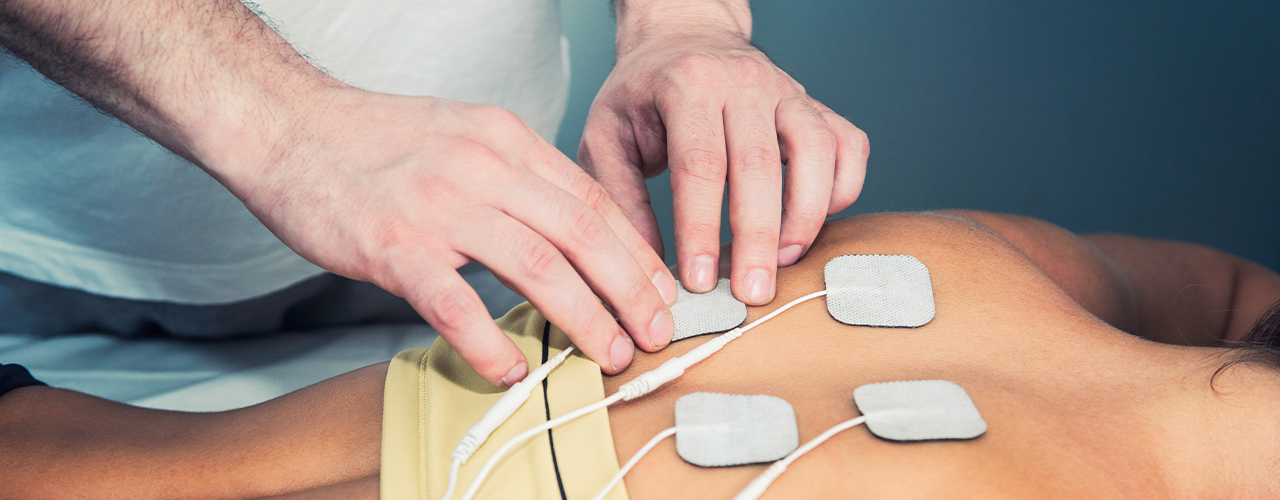
Electrical stimulation is a therapeutic technique used in stroke rehabilitation to enhance motor recovery, muscle strength, and overall functional outcomes. Various forms of electrical stimulation can be utilized, each targeting different aspects of stroke recovery.
Your brain uses chemical and electrical signals to tell your muscle when to move. But, when a stroke occurs, the damaged part of the brain no longer sends these signals. As a result, it becomes difficult to move your affected muscles.
Once we activate the electric stimulation through your skin by placing non-invasive electrodes, it sends a mild electrical impulse to your muscles thereby causing them to contract.

How is it done?
1. Functional Electrical Stimulation (FES). Purpose: Improve motor function and facilitate movement by stimulating muscles during functional activities. Procedure: Application: Electrodes are placed on the skin over the muscles that need stimulation. Technique: Electrical impulses are delivered to induce muscle contractions, often used during functional activities like walking or reaching. Benefits: Enhances muscle strength, coordination, and motor control, and can improve gait and upper limb function. Examples: FES for Gait Training: Stimulates muscles involved in walking to improve gait patterns and walking ability. FES for Upper Limb Function: Helps with tasks like grasping and reaching by stimulating muscles in the arm and hand.
2. Transcutaneous Electrical Nerve Stimulation (TENS) Purpose: Provide pain relief and reduce spasticity by stimulating sensory nerves. Procedure: Application: Electrodes are placed on the skin near the area of pain or spasticity. Technique: Low-frequency electrical impulses are delivered to the skin, which can interfere with pain signals and may reduce muscle spasticity. Benefits: Provides analgesic effects and can help manage pain and discomfort during rehabilitation. Examples: Pain Management: Used to relieve chronic pain or discomfort associated with stroke and rehabilitation. Spasticity Reduction: Helps in reducing muscle tightness and improving movement.
3. Neuromuscular Electrical Stimulation (NMES) Purpose: Improve muscle strength and function by stimulating motor nerves. Procedure: Application: Electrodes are placed on the skin over specific muscle groups. Technique: Electrical impulses are delivered to induce muscle contractions, often used to strengthen weak muscles and improve muscle activation. Benefits: Enhances muscle strength and endurance, and can be used to prevent atrophy and improve functional movements. Examples: Strength Training: Stimulates muscles to increase strength and reduce muscle weakness. Prevention of Atrophy: Used to maintain muscle mass and function in the affected limbs.

Benefits
- Helps to activate the damaged portion of the brain
- Stimulation engages neuroplasticity (the process the brain uses to rewire itself and heal from injuries like stroke)
- It works by restoring communication between the brain and the spastic muscles which helps the muscles relax and lengthen
- Electrical stimulation helps to introduce movement into paralyzed muscles after a stroke
- When it is done with a combination of our functional rehabilitation, it helps to further engage the brain-muscle connection. This will, in turn, increase the amount of motor control you can gain back
- It helps Motor recovery of paralyzed or weakened limbs
- Stimulating your muscles regularly will also help prevent muscle atrophy (a common side effect of stroke paralysis.)
- Improved Motor Function: Enhances muscle activation and coordination, leading to better movement and functional outcomes.
- Increased Muscle Strength: Helps in rebuilding strength and reducing muscle weakness.
- Pain Reduction: Alleviates pain and discomfort associated with stroke and rehabilitation.
- Enhanced Neuroplasticity: Promotes changes in the brain that support motor recovery and functional improvement.

Recommended Therapies